What Is a Stock Taking Application? A Complete Guide
| By Stockount
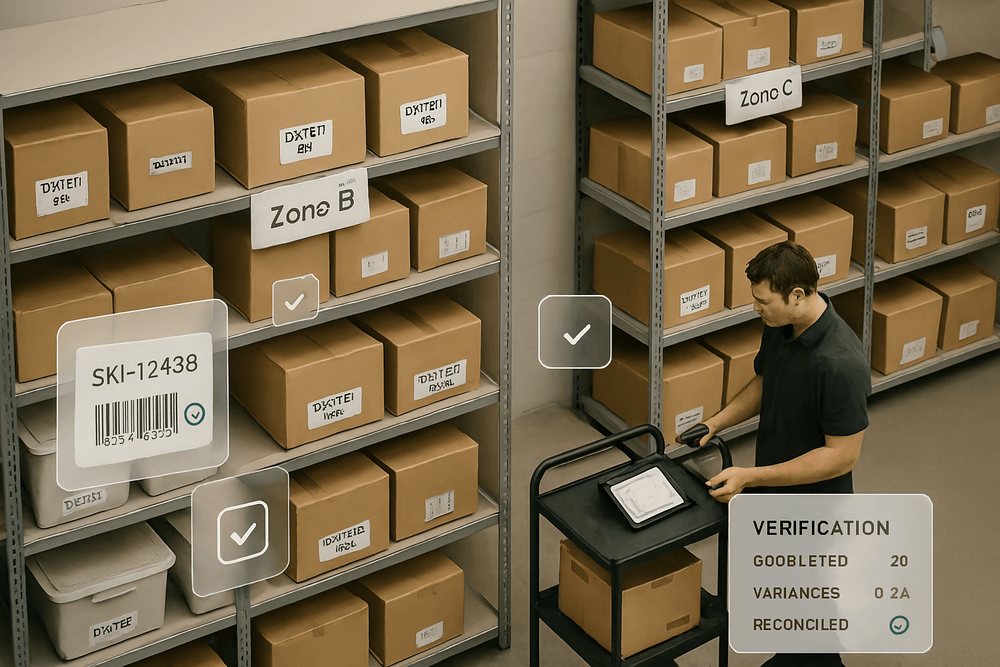
Inventory accuracy is a key prerequisite for effective operations, trustworthy financial reporting, and audit compliance. Manual stock taking methods and spreadsheet-based tracking often fail to deliver reliable results as businesses expand across teams, locations, and product ranges.
A stock taking application solves this challenge by enabling structured, digital, and verifiable physical inventory checks.
This guide explains what a stock taking application is, how it works, why businesses need it, and how it supports accurate inventory control at scale.
What Is a Stock Taking Application?
A stock taking application is a digital tool used to physically confirm inventory quantities and compare them with system records. It allows businesses to record actual stock counts at storage locations—such as stores, warehouses, or outlets—in a controlled and traceable manner, while identifying discrepancies.
Unlike inventory management systems that track transactions, a stock taking application focuses on verifying physical stock.
Simply put:
- System inventory shows what should be available
- Stock taking confirms what actually exists
This distinction is critical for accuracy, compliance, and audit readiness.
Why Stock Taking Is Still Necessary in the Digital Age
ERP, POS, and inventory management systems are essential to modern operations. While they track transactions efficiently, they cannot independently detect:
- Shrinkage or theft
- Expired or damaged stock
- Lost inventory
- Timing or data entry errors
- Unauthorized stock movements
Without physical verification, these issues accumulate over time, creating gaps between system data and reality.
A stock taking application ensures inventory records are routinely validated against actual stock.
How a Stock Taking Application Works
A typical stock taking workflow includes:
System Stock Preparation
Inventory data is sourced from ERP, POS, or accounting systems.Physical Stock Count
Stock is counted on-site using mobile devices or scanners.Controlled or Blind Counting
System quantities are hidden to prevent assumption-based counting.Automated Comparison
Physical counts are compared with system records.Variance Identification
Shortages, excesses, and mismatches are flagged automatically.Reporting and Documentation
Audit-ready reports and logs are generated for review and reconciliation.
This standardized process reduces dependence on manual judgment and interpretation.
Key Features of a Stock Taking Application
Most stock taking applications include:
- Mobile-based stock counting
- User-level access and accountability
- Time-stamped audit trails
- Multi-location inventory support
- Variance and reconciliation reporting
- Exportable audit documentation
These features ensure results are accurate, repeatable, and defensible.
Stock Taking Application vs Spreadsheet-Based Stock Taking
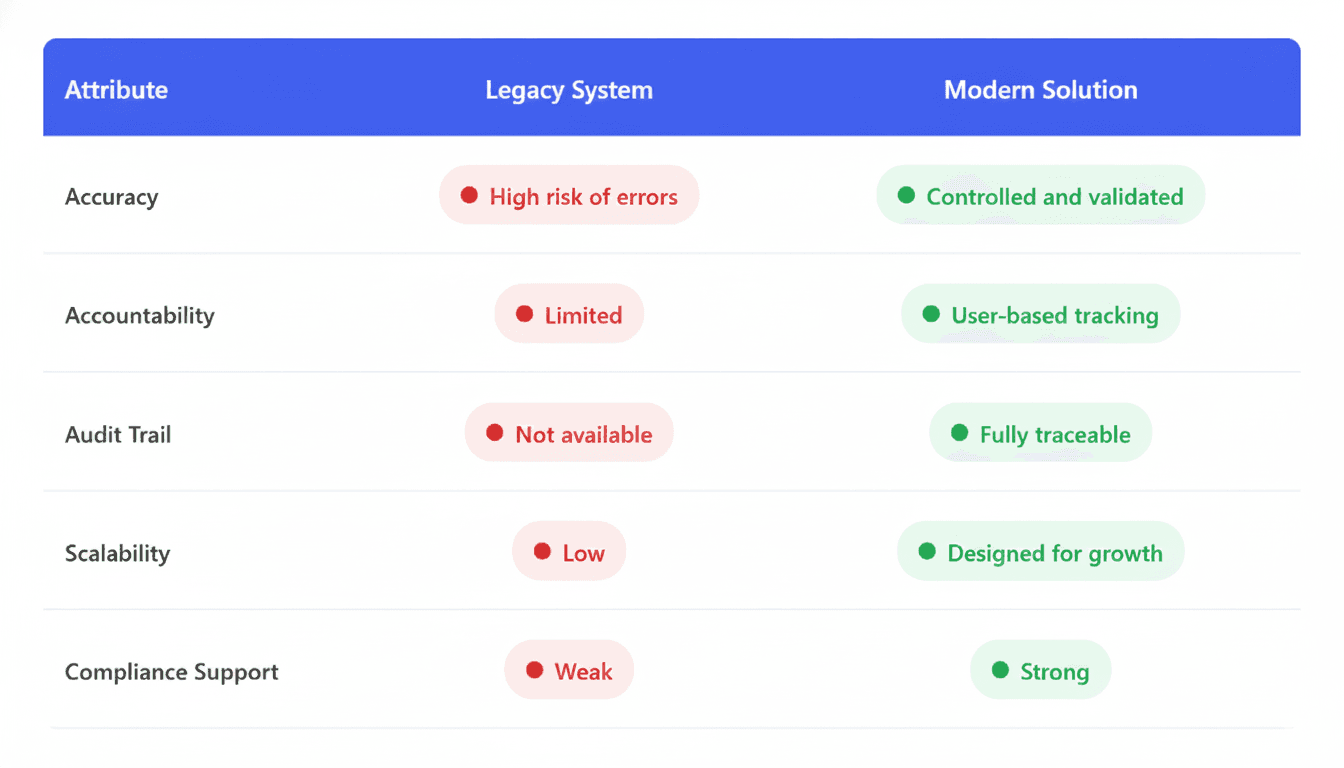
While spreadsheets may work for small inventories, they lack the controls required for large or regulated environments.
Stock Taking Application vs Inventory Management Software
It’s important to distinguish between the two:
- Inventory management software tracks stock movements such as sales, purchases, and transfers.
- Stock taking applications verify whether inventory physically exists.
Inventory systems rely on correct inputs. Stock taking applications act as a verification layer, ensuring system data reflects reality. When used together, they significantly improve inventory accuracy.
Who Uses Stock Taking Applications?
Stock taking applications are widely adopted across industries, including:
- Retail and wholesale
- Warehousing and logistics
- Healthcare and pharmaceuticals
- Hospitality and food services
- Manufacturing and distribution
- Internal and external audit teams
Any organization where inventory accuracy affects financial reporting or compliance can benefit from a structured stock taking solution.
Benefits of Using a Stock Taking Application
- Improved inventory accuracy
- Reduced discrepancies and shrinkage
- Faster reconciliation and audits
- Clear accountability for stock counts
- More reliable data for planning and decision-making
Over time, these benefits strengthen governance and reduce operational risk.
How Often Should Stock Taking Be Performed?
The ideal frequency depends on risk and inventory value:
- Retail: Monthly or cycle counts
- Warehouses: Weekly or rotating counts
- High-value items: Frequent spot checks
- Regulated industries: Compliance-driven schedules
Stock taking applications make frequent verification practical and less disruptive.
What to Look for in a Stock Taking Application
When evaluating a solution, consider whether it offers:
- Ease of use for counting teams
- Strong audit trails and reporting
- Integration with existing systems
- Scalability across locations
- Secure access control and data handling
The goal is to improve accuracy without adding operational complexity.
Conclusion
A stock taking application is essential for maintaining accurate, reliable, and audit-ready inventory records. By replacing manual and spreadsheet-based methods with a structured digital process, businesses can reduce risk, improve control, and build long-term confidence in their inventory data.
As inventory operations grow in scale and complexity, adopting a stock tracking software becomes a strategic necessity rather than an optional improvement.
Frequently Asked Questions (FAQ)
1. What is the main purpose of a stock taking application?
It ensures that the inventory shown in systems matches the stock physically available in stores or warehouses.
2. How is a stock taking application different from inventory management software?
Inventory management software tracks movements, while a stock taking application verifies physical existence.
3. Can small businesses use a stock taking application?
Yes. Businesses of all sizes benefit from improved accuracy and control.
4. How often should stock taking be done?
Most businesses perform monthly or cycle counts, depending on inventory value and risk.
5. Do stock taking applications support audits and compliance?
Yes. They provide traceable records and reports that simplify audits and compliance reviews.